Where do we intend our organisation to be in three to five years?
And what must we become to achieve that destination?
The 3V Strategic Engine™
Vision creates clarity. Value reveals reality. Vehicle turns strategy into committed action.
The conversation
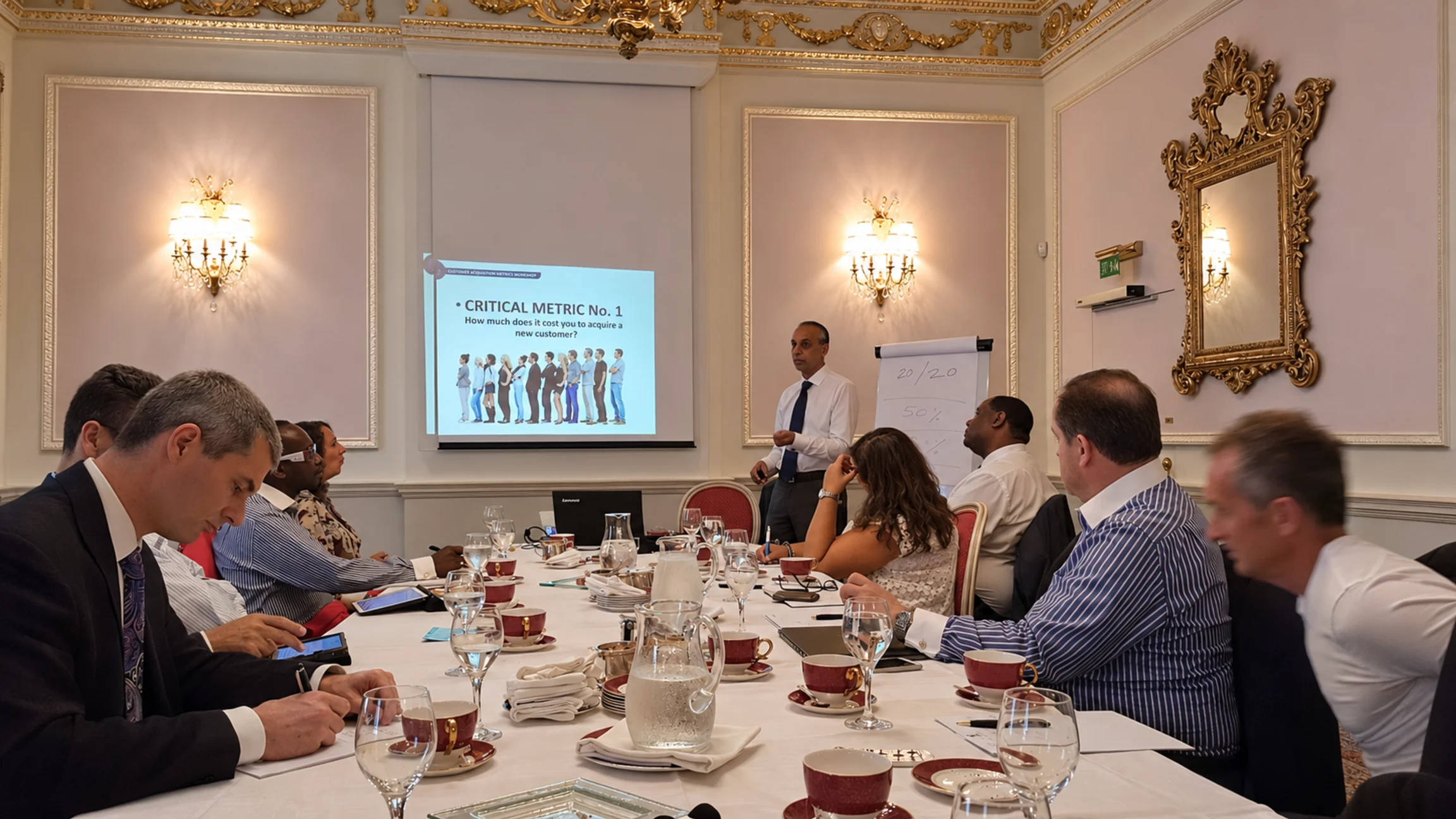
A room full of experienced leaders may have a shared presentation without a genuinely shared destination. Equally, people may be very busy without knowing what value their activity has created. The 3V questions are designed to expose those distinctions.
They are deliberately simple. The discovery behind them is not. It examines evidence, assumptions and the practical ability of the organisation to act.
Vision · Value · Vehicle
And what must we become to achieve that destination?
And what gaps and constraints stand between where we are and where we’re going?
And what must each leader own, and do next, to make it happen?
Know where you’re going. Know where you stand. Know what to do on Monday.
01 · Vision → Clarity
A destination is more than a number on a revenue chart. Leadership must examine the customers it intends to serve, the economic model it needs, the capabilities it must develop and the decisions it must be prepared to make.
The future is uncertain. A useful Vision offers direction without pretending every event can be forecast.
02 · Value → Reality
The twelve-month view challenges the difference between expenditure, effort and value. Value might appear in stronger economics, improved client outcomes, better capability or reduced organisational fragility, but claims must be supported by evidence.
For younger organisations, the examination uses the history that exists. A favourable result should not automatically be credited to good execution, and intense activity should not be mistaken for progress.
03 · Vehicle → Commitment
Before treating an action as a firm commitment, the discovery must examine who has the authority to act, which resources are available, how much capacity exists and what dependencies must be resolved.
Owners and deadlines can be useful. But they are only meaningful when the intended change is feasible and the results can be measured.
Strategy that reaches every leader’s diary.
Why call them flywheels?
Real execution creates evidence. That evidence changes our understanding of value, sometimes challenges our assumptions about the destination and should improve the next set of decisions.
This is how 3V can become a continuing operating discipline rather than a workshop that produces an attractive document.
A private conversation
A useful first conversation can begin with these six questions, even when the answers are incomplete.