
About Moe Nawaz
Structural Thinking for Founders, CEOs and Boards Carrying Real Weight.
I work with serious founders, CEOs, boards and leadership teams whose businesses have grown, but now feel heavier, slower or more dependent than they should.
At seven figures, complexity begins exposing every unspoken assumption.
At eight and nine figures, the same invisible patterns become more expensive: decision drag, unclear accountability, leadership overload, weak challenge and growth that quietly outpaces the structure built to carry it.
The issue is rarely ambition.
It is architecture: how authority moves, how accountability holds, how decisions are made, how execution carries load, and whether the business can grow beyond the individuals currently holding it together.
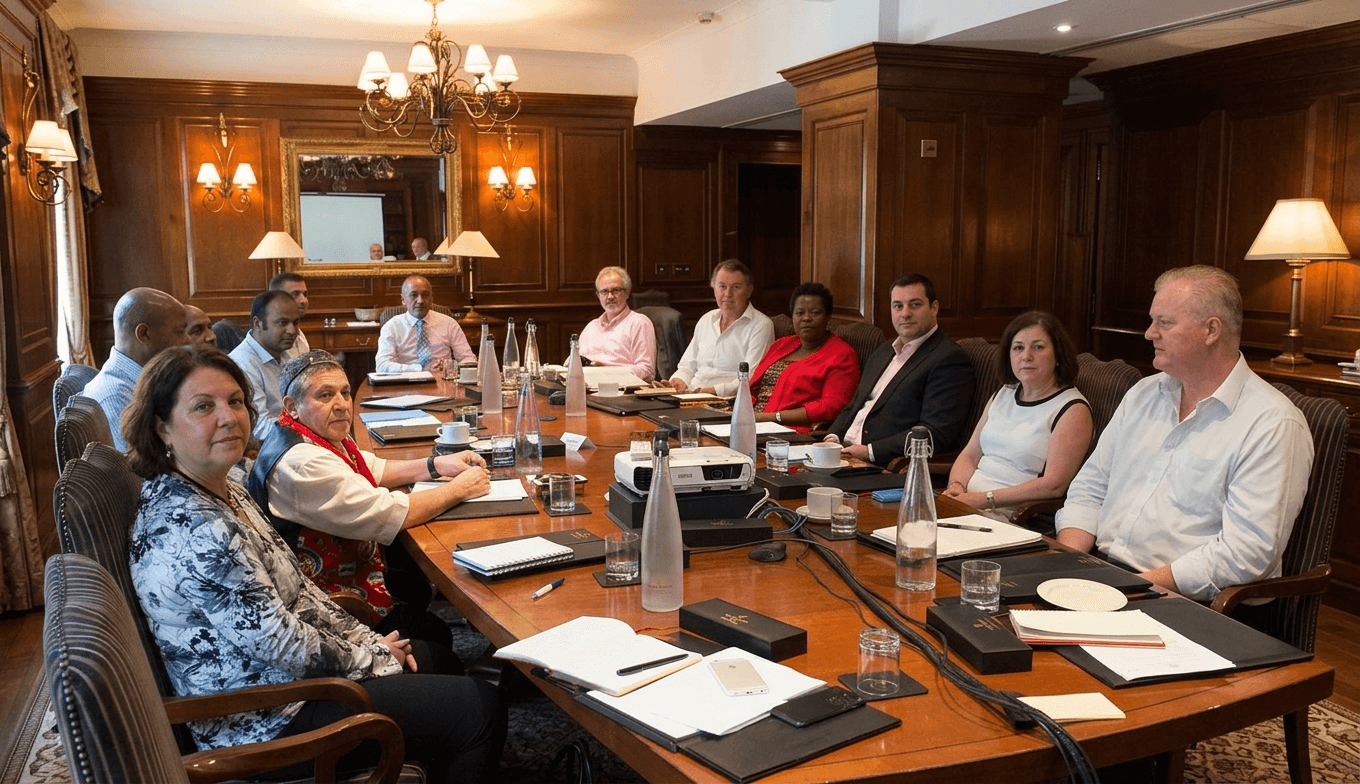
40+
Years alongside senior leaders navigating expansion, complexity, succession, and exit
22
Return invitations to boards, a sign that the work holds up where consequence is real
£1bn+
In successful exits influenced across finance, technology, professional services, and growth-stage enterprises
Where my work begins
I Do Not Work With Leaders Chasing Noise. I Work With Leaders Carrying Real Pressure.
Revenue may be rising. The market may be active. The opportunity may be real.
But when decisions keep rising upward, execution depends too heavily on key people, accountability becomes blurred and growth creates more pressure than freedom, structural work begins.
This is the point where many businesses keep applying effort to a problem that is no longer about effort.
The business has not failed.
It has outgrown the structure that created its first success.
My work begins where the visible symptoms are no longer enough: slower decisions, founder dependency, leadership strain, weak challenge, rising complexity, succession risk, exit dependency or a boardroom that no longer sees clearly enough.
What I examine
How authority really moves
Where founder, CEO or board dependency has become too concentrated
How accountability is distributed, avoided or blurred
How strategy is translated into execution
Where decision drag is slowing growth
Whether the business can carry scale, succession or exit beyond key individuals
How the work is different
Not motivational. Not performative. Structural.
The work is often quiet, but the consequences are visible in how the business thinks, decides, executes and carries pressure.
It is designed for serious conversations where clarity matters more than performance, and where the leader is ready to examine what the business is really built on.
Structural Forensics
Growth exposes hidden load. I identify where founder dependency, decision drag, weak accountability or complexity is exceeding the structure beneath the business.
Independent Strategic Challenge
No theatre. No motivational language. No diluted truth. I act as an independent thinking partner where commercial accuracy, structural clarity and timing matter.
Transferable Value
If value remains tied to the founder, CEO or a few key people, scale, succession and exit remain fragile. Architecture turns personal effort into transferable strength.
Why architecture, not advice
Early in my career, I saw the same pattern repeat.
Strong people. Strong ambition. Real opportunity. Weak architecture.
I first saw the pattern in serious boardrooms, where the cost of delay, drift and weak structure had already become expensive.
Later, I saw the same pattern much earlier in founder-led businesses, where the numbers were smaller but the mechanics were the same.
At seven figures, it created complexity.
At eight and nine figures, it became expensive.
That realisation shaped the work I do now.
Not coaching.
Not inspiration.
Design.
Who this tends to resonate with
Founders of established 7 and 8 figure organisations whose businesses have grown, but still depend too heavily on their decisions, standards, energy or personal force.
CEOs carrying more pressure than the organisation should be placing on one role
Leadership teams where capable people still produce friction, delay or repeated escalation
Boards where authority is narrowing rather than strengthening
Businesses where growth has exposed founder dependency, decision drag, weak accountability or structural strain
Owners who know succession or exit readiness remains more theoretical than transferable
The conversation
If the Business Feels Heavier Than the Opportunity in Front of It, the First Step Is Clarity.
If growth feels slower, heavier, more dependent or more difficult to carry than it should, the issue may not be effort.
It may be architecture.
The first step is to see where the real drag is coming from: founder dependency, decision bottlenecks, weak challenge, unclear accountability, leadership overload, AI pressure, succession risk or a structure that has not kept pace with growth.

Moe Nawaz does not work with companies involved in industries such as gambling, tobacco, alcohol, or any other activities that conflict with his core values and ethical principles.
