
Directors’ WarRoom
A Private Board-level Environment for 8 and 9 Figure Leaders Carrying Real Consequence.
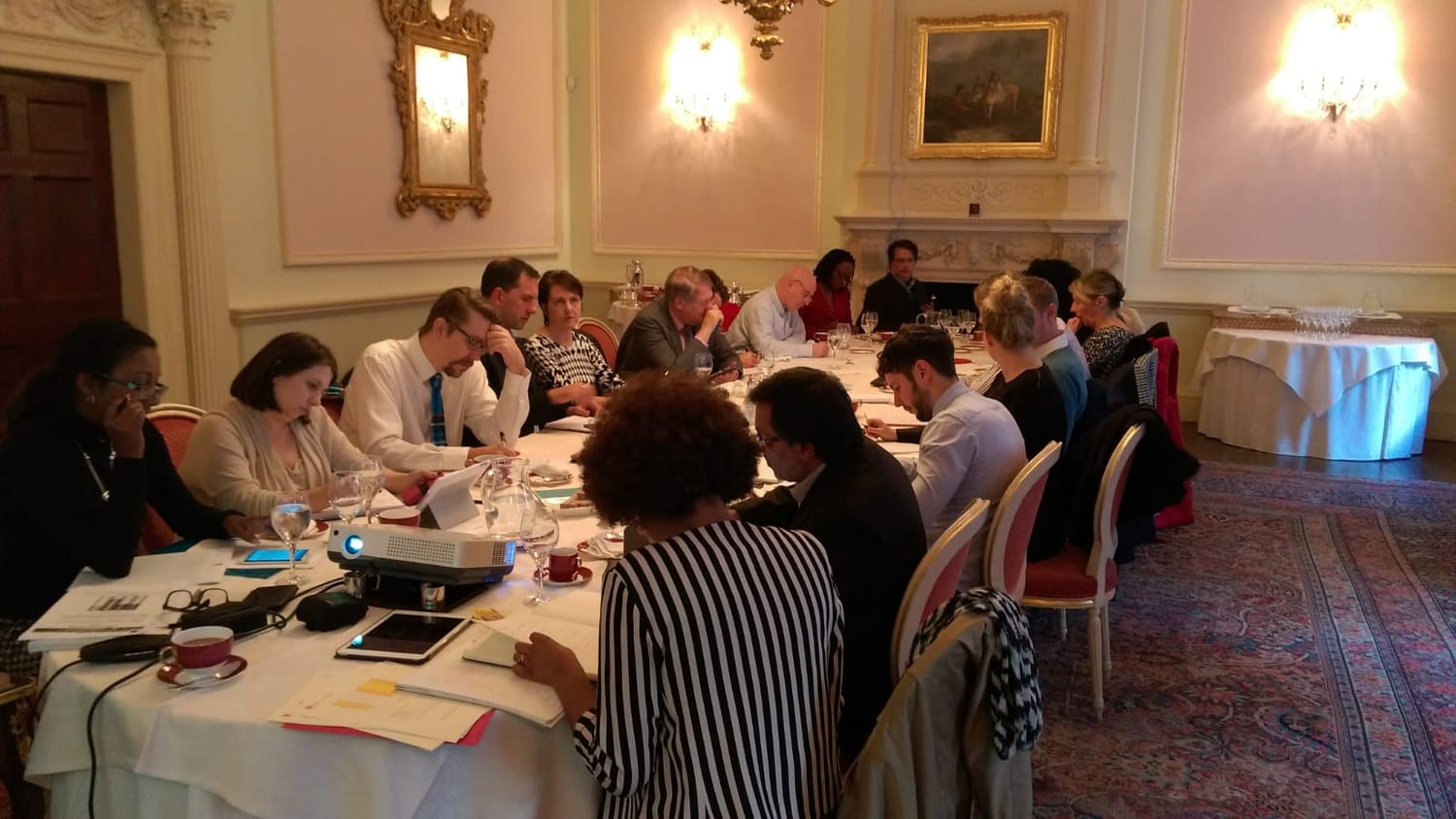
Directors’ WarRoom is a selective, closed-door environment for 8 and 9 figure founders, CEOs, chairs, board members and senior decision-makers whose organisations are already successful, already under load, and already beyond generic peer groups, networking rooms or motivational forums.
This is not a room for surface-level advice.
It is a private board-level environment for leaders facing structural pressure, scale friction, succession reality, exit dependency, leadership load and the kind of complexity that only becomes visible once a business has grown large enough to carry serious consequence.
8–9
Figure founders, CEOs, chairs and senior decision-makers only
Private
Closed-door, peer-level, boardroom-style environment
Selective
Entry begins with a strategic conversation, not casual registration
What happens in the room
Structural Issues Are Examined Where Commercial Consequence Actually Lives.
The WarRoom is not built around presentation, performance or polite discussion.
It is built around serious examination of structural reality: where pressure is rising, clarity is narrowing, authority is centralising, succession is becoming harder, exit readiness is still too fragile, or the organisation is carrying more complexity than its current architecture can hold.
The point is not to impress the room.
The point is to see what the business can no longer afford to avoid.
Challenges Are Surfaced Without Performance
The issues brought into the room are not dressed up for comfort. They are examined with seriousness, discretion and commercial maturity.
Structural Patterns Are Identified Beneath the Symptoms
Leaders are challenged to look beyond personality, politics and immediate pressure to the recurring patterns shaping decisions, accountability, authority and execution.
Assumptions Are Tested Without Ego
The room examines whether the current architecture is still strong enough for growth, scale, succession, exit and the next level of consequence.
Who belongs here
This environment is designed for leaders already carrying serious scale and responsibility.
8 and 9 Figure Founders, CEOs, Owners and Senior Decision-Makers
Leaders whose businesses have moved beyond tactical growth and now carry structural consequence.
Chairs, Board Members and Senior Decision-Makers
Those responsible for oversight, resilience, succession, governance, strategic clarity and long-term transferability.
Private Equity and Investor-Backed Leadership
Leaders operating where growth, value creation, integration, leadership depth and exit timing are live concerns.
Senior Teams Preparing for Transition, Succession or Exit
Leadership groups who need to test whether apparent stability is supported by real structural independence.
Directors’ WarRoom Members
Leaders who understand that serious growth requires disciplined challenge, commercial truth and a room strong enough to hold what ordinary conversations avoid.
Who this is not for
Briefly, and deliberately.
This is not a seminar.
It is not a networking club.
It is not a motivational gathering.
It is not a peer group for light-touch accountability.
It is not designed for businesses looking for general advice, early-stage direction or low-stakes discussion.
The context here is already serious, already commercial and already under load.
If the business is not yet carrying meaningful commercial consequence, leadership complexity or structural pressure, this is not the right room.
If a leader is already carrying consequence and wants disciplined challenge around growth, scale, succession, exit, AI readiness, decision drag or structural pressure, then the conversation may be relevant.
What leaders experience over time
Clarity compounds when structural pressure is examined repeatedly, not occasionally.
Leaders who engage properly tend to recognise constraints earlier, reduce unnecessary escalation, distribute authority with more precision, strengthen leadership accountability and improve organisational independence before transition forces the issue.
The value is not inspiration.
The value is repeated exposure to serious challenge, commercial truth and structural clarity.
Over time, the room helps leaders see where the business is becoming too dependent, too slow, too politically careful, too reliant on informal authority, too board-dependent or too fragile beneath visible success.
The point is not to leave the room energised.
It is to leave with clearer sight, stronger judgement and a better understanding of what the next stage will require.
Why entry is selective
The value of the room depends on the weight carried by the people inside it.
Directors’ WarRoom is selective because the work requires serious context, serious pressure and serious consequence.
The room is built for leaders who can contribute real experience, not simply consume ideas.
Fit matters.
Readiness matters.
Confidentiality matters.
Commercial maturity matters.
The ability to examine structural reality without ego matters.
This is why entry begins with a Private Strategic Conversation, not casual registration.
Next step
Entry does not begin with a casual application. It begins with clarity.
The route into Directors’ WarRoom is deliberate.
The first step is a Private Strategic Conversation to establish relevance, readiness, altitude and alignment.
From there, it becomes clearer whether Directors’ WarRoom is the right environment, or whether another form of structural work would better serve the leader, board and organisation.

Moe Nawaz does not work with companies involved in industries such as gambling, tobacco, alcohol, or any other activities that conflict with his core values and ethical principles.
